
Greenstead
Building trust between small farms and restaurants—one honest order at a time
Picture the back door of a busy kitchen at 6 a.m. Crates of greens stacked by the walk-in. A chef checking clipboards against what actually arrived. Three different text threads trying to confirm tomorrow's delivery. This is how small farms and independent restaurants have always traded—personal relationships, verbal agreements, last-minute phone calls, and a lot of trust that things will work out.
Greenstead's founder came from that world. He'd worked both sides—sourcing for restaurant kitchens, managing deliveries for small farms—and he saw the friction everywhere. Small farms struggle to compete with big distributors who offer online ordering, account management, and reliable logistics. Restaurants want to buy local and seasonal, but the overhead of managing multiple farm relationships makes it easier to just call the big guys.
What if small farms could trade as easily as large distributors? What if there was a platform built specifically for the way farms and restaurants actually work—not a generic marketplace trying to serve everyone, but something designed for this specific relationship? We helped Greenstead build that platform: a brand and digital presence that made farm-to-table ordering feel as reliable as it should be.
The brand challenge
Greenstead came to us with a clear vision and a tight timeline. They needed to launch with working restaurant partnerships—real chefs, real farms, real orders—to validate the model. But this wasn't just about building software. It was about creating trust in a new way of working. Three things needed to happen:
Chefs need to trust that orders will be accurate, delivery will be reliable, and invoices will match what shows up. Farms need to trust that restaurants will actually order what they commit to, and that they'll get paid fairly and on time. The brand couldn't feel like generic tech startup trying to "disrupt" farming—it needed to feel like it understood this world.
Chefs plan menus days ahead, adjust orders the day before service, and reconcile deliveries the morning they arrive. Farms manage availability by harvest date, handle substitutions when crops come in differently than expected, and need clear records for invoicing. The platform had to work the way these businesses actually operate—not force them into rigid e-commerce patterns.
This needed to work for day one: a chef could browse what's available, place an order for a specific delivery date, make adjustments, and get a receipt that matches what arrives. No learning curve. No extensive training. Just clear, reliable ordering that replaces the morning text thread scramble.
Design foundation
Before building anything, we needed to understand what success looked like for the people who'd actually use this every day.
Greenstead wasn't trying to be a generic marketplace or a tech platform that happens to sell produce. It was a tool built by someone who understood farm-to-restaurant relationships—the handshake agreements, the seasonal realities, the trust required when your livelihood depends on things arriving on time.
The biggest barrier wasn't technology—it was trust. Chefs worry: "Will this farm actually have what I need when I need it?" Farms worry: "Will this restaurant actually buy what they said they would?" Every feature, every piece of copy, every interaction needed to build confidence that this platform understood those concerns.
We mapped the actual service moments:
- Menu planning (3-5 days out) Chefs browsing what farms can deliver, checking availability
- Pre-service ordering (1-2 days out) Finalizing quantities, handling substitutions
- Delivery reconciliation (morning of) Matching what arrived against what was ordered
The platform needed to organize around these moments, not around abstract features.
Keep it narrow at first. One delivery date per order. Clear availability windows. Simple product categories. Plain-English everything. If a chef or farmer couldn't understand it in five minutes, it was too complicated.
This understanding gave us our design direction:
build a brand that feels like it understands this world, and a platform that works the way farms and restaurants actually operate.
Brand Identity
We created a brand system that felt grounded in the work, not in startup aesthetics.
"Greenstead" references both "farm" (green) and "reliable place" (homestead)—conveying fresh produce and dependable relationships. The tagline we developed captured the mission: bringing transparency and ease to farm-to-table trading.
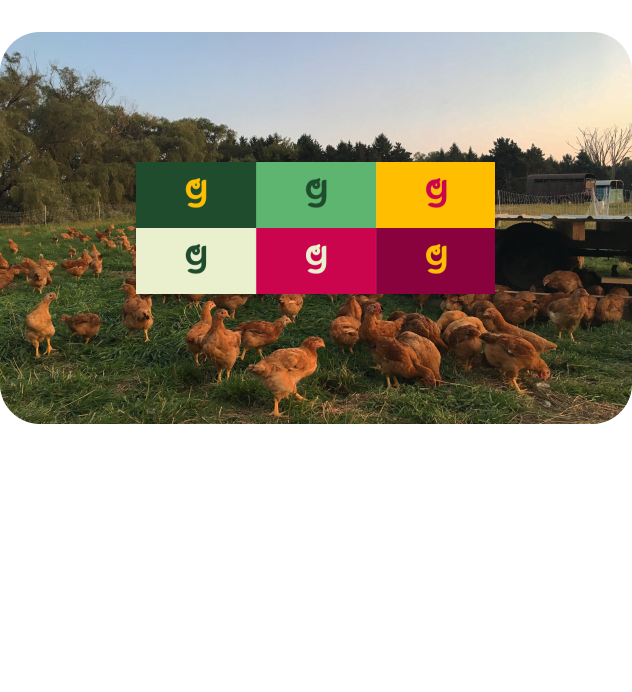
A clean, earthy system—logo, color palette, typography—that felt professional without being corporate, agricultural without being rustic. The brand needed to work in a busy kitchen (printed invoices, packing slips) and on a farmer's phone in the field, so clarity trumped cleverness.
We developed a voice that was straightforward, practical, and respectful of the work. No startup jargon about "revolutionizing" or "disrupting" farming. Just clear language about making ordering easier, invoices clearer, and relationships more reliable.
Digital Presence
We built a platform organized around the three verbs that defined the workflow: find, order, confirm.
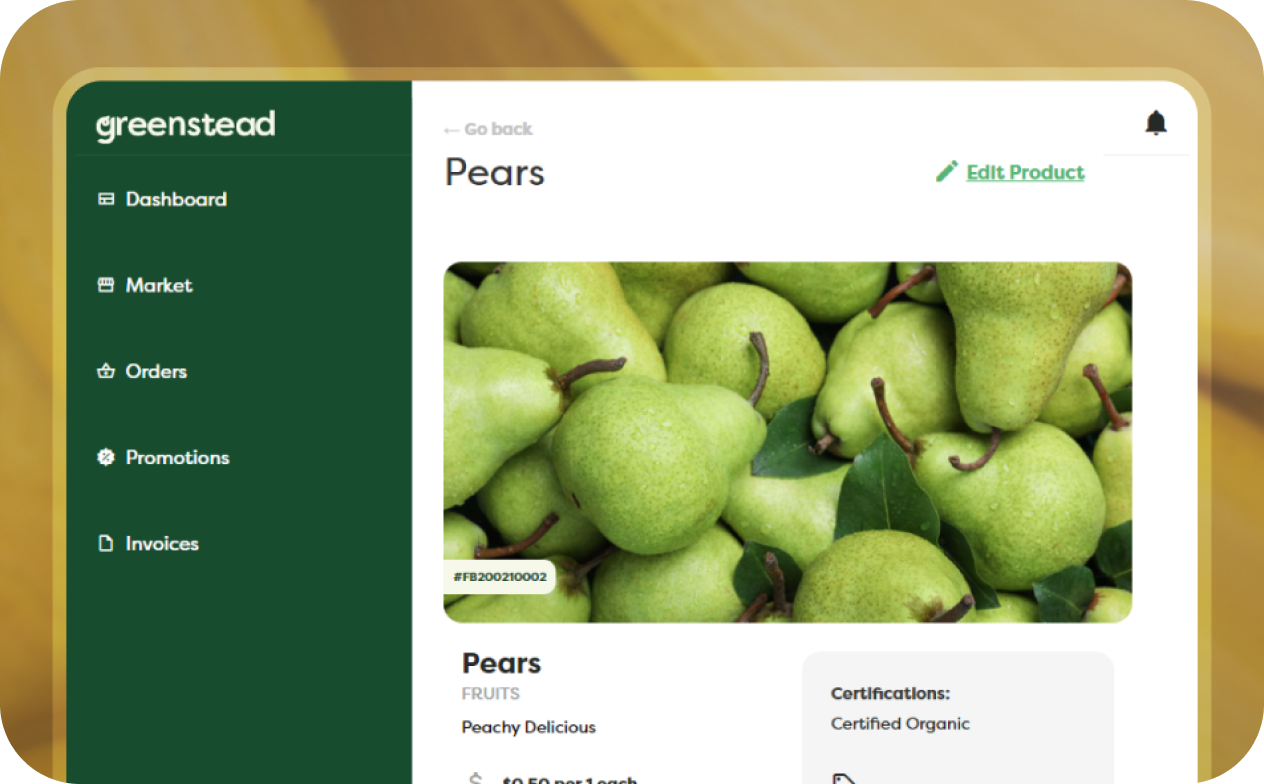
Farms list what they're harvesting and when it's available for delivery. Chefs browse by delivery date, not by some abstract "shop all products" grid. Availability is honest—if a farm can't deliver on Tuesday, it doesn't show up in Tuesday's catalog.
Place an order for a specific delivery date. Make adjustments up until the cutoff. See "what changed since last order" if you're a repeat customer. Get confirmation that includes allergy flags, unit sizes, and any substitutions the farm made.
Every order generates a clean invoice that matches exactly what's being delivered. Export to PDF, send to your bookkeeper, reconcile against what arrived. No surprises, no guesswork about what you're actually paying for.
Notes on orders, substitution notifications, delivery updates—all the things that used to require morning phone calls and text threads now happen in one place where both sides can see the full conversation.
We used predictable patterns—lists, clear labels, familiar interactions. The goal wasn't to innovate on ordering flows; it was to make something so straightforward that busy chefs and farmers could use it without thinking about it.
Brand Systems
We set up patterns that made the platform maintainable and extensible:
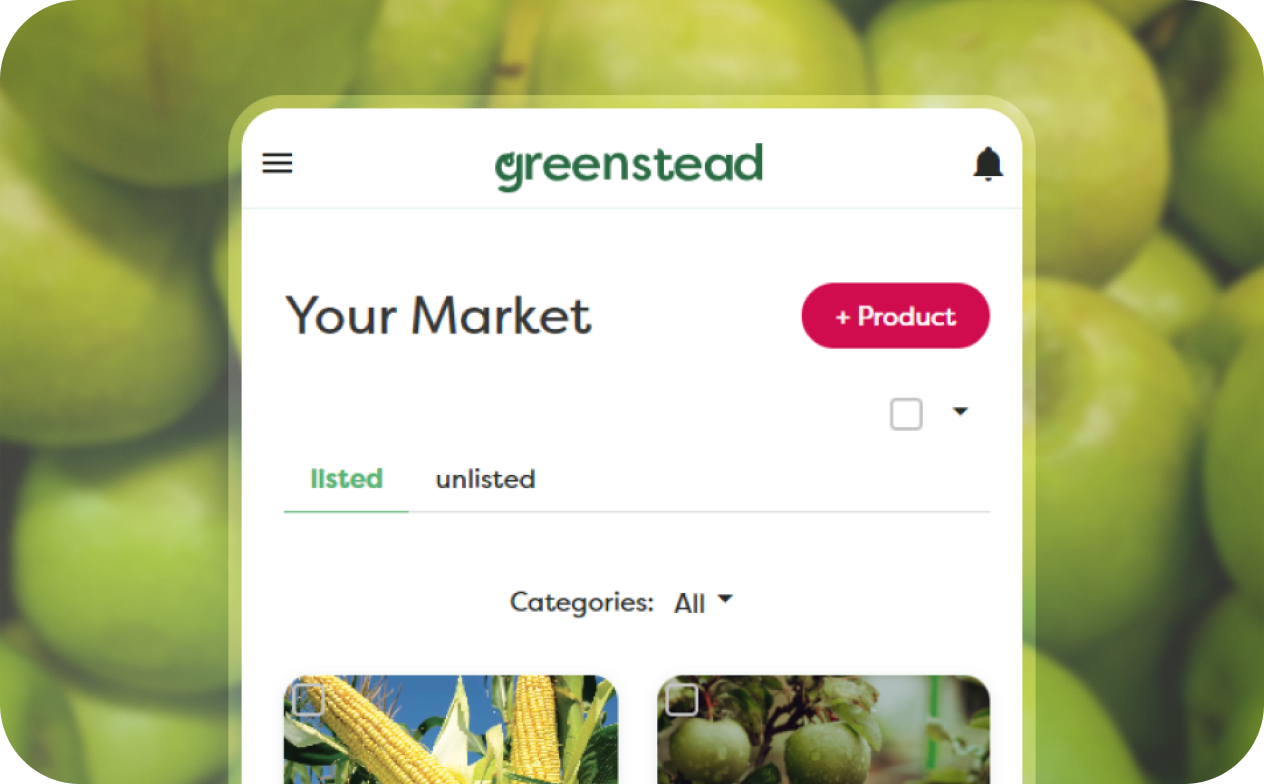
Simple, tight schema—farm, product, unit, price, availability date. Easy to manage, easy to expand when needed, but not trying to handle every edge case on day one.
Consistent microcopy for availability, units, allergy information, delivery notes. Editors could add new farms and products knowing exactly what information to include and how to write it.
Order confirmations, delivery updates, substitution notifications—all written in plain language and structured consistently so both chefs and farmers knew what to expect.
How we kept it real
We organized the platform around service moments (menu planning, pre-service ordering, delivery reconciliation) rather than abstract user flows. Each screen answered the specific question someone had at that moment.
We chose predictable patterns—lists, badges, plain-English labels—over clever interactions. Better to be immediately understandable than innovative and confusing.
We limited the first release to "order for a specific delivery day" with a tight product schema. This meant simpler logic, clearer promises to customers, and less back-and-forth when crops came in differently than expected.
Every decision prioritized the chef checking inventory at 5 a.m. and the farmer managing deliveries between other farm work. If it didn't work in those moments, it didn't belong in the platform.
Results (and what's next)
Greenstead launched with working restaurant partnerships and validated the core ordering flow. Early walkthroughs with chefs and farmers confirmed the platform solved real pain points—ordering was faster, clearer, and more reliable than text-thread coordination. The feedback also surfaced the right next features: standing orders for regular customers and route batching for farm delivery optimization.
The company later closed due to the pandemic's devastating impact on the restaurant industry and the farms that supplied them. But the work lives on: the brand thinking, the platform patterns, and the deep understanding of what farm-to-restaurant relationships actually need. These insights continue to inform tools being built for local food systems.
Text threads, spreadsheets, and morning scrambles → a clear, reliable platform for ordering, tracking, and reconciling farm-to-table deliveries.
Building something that serves real people solving real problems?