


Accessibility and the People You're Turning Away
When most people hear "web accessibility," they picture the digital version of a hallway and a door. Can someone access ...

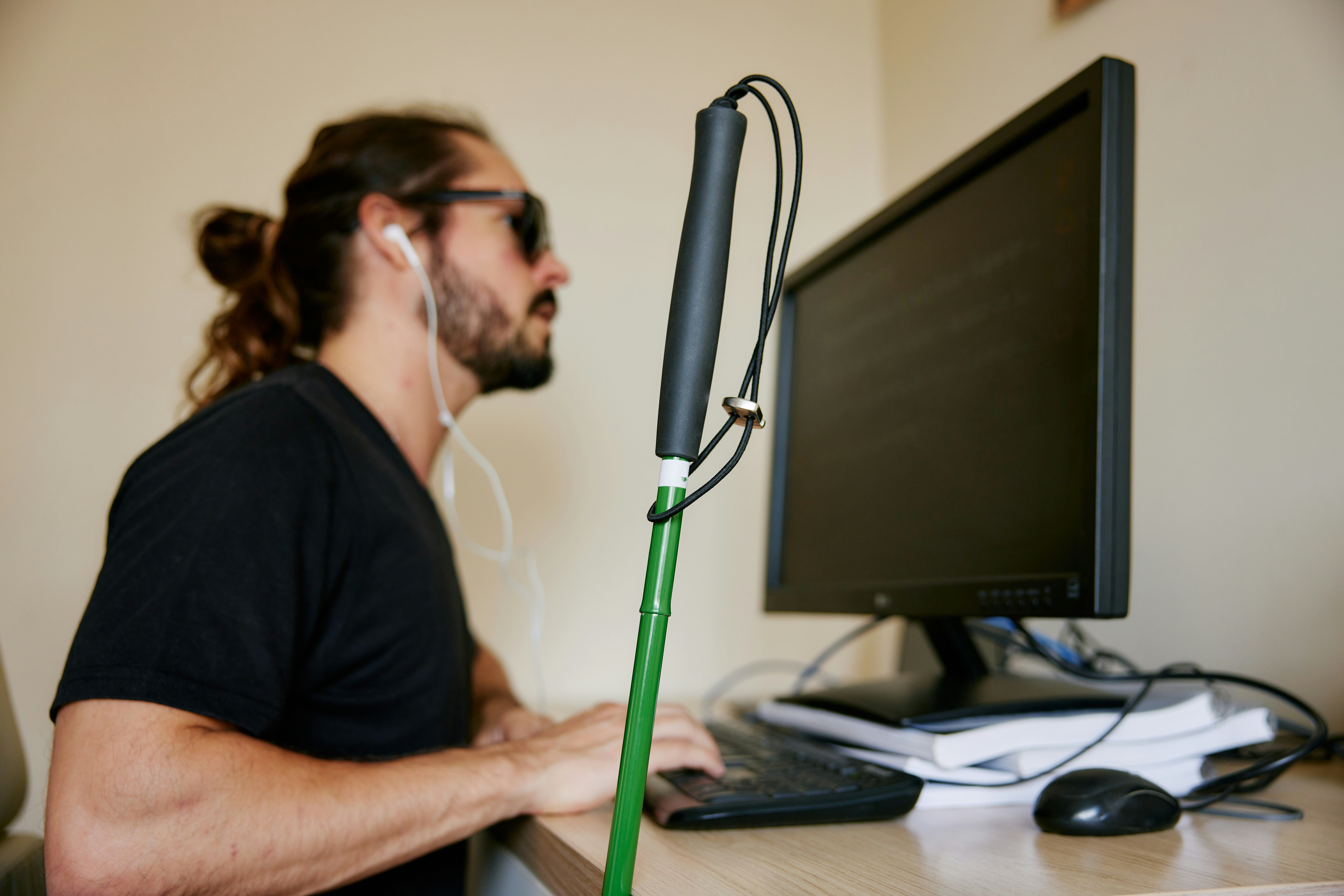
Photo by bruce mars on Unsplash
Everywhere I turn, there's a ✨sparkles✨ button waiting to open a prompt box that asks, "What would you like to do today?" Ostensibly, that prompt box is what earns the "AI-powered" badge for the product. But lately I've been wondering - when did we collectively decide that "AI-powered" just means "wired up a textbox to OpenAI's API"?
And to a degree, I get it. Everyone's adding AI because customers are asking for it. The pressure to ship something AI-powered is real, and a prompt box is the fastest way to say "yes, we have AI." I'm not saying everyone is wrong for doing it. I'm saying there's probably a better way to think about what AI should actually do in your product - and more importantly, what it says about your brand when that's the interface you choose.
Because here's the thing: every interface is a promise. When you put a button in your app, you're promising that clicking it will do something specific and predictable. When you put a form on the page, you're promising that filling it out will accomplish a clear goal. Your interface is how your brand shows up in the product - it's not separate from your brand, it is your brand in that moment. So when you replace all of that with a prompt box, what are you actually promising? And can you keep that promise?
Here's the problem: I don't know what to do with your prompt box. And I say that as someone who uses AI daily and loves the creative potential of a blank canvas. But your app isn't a blank canvas. It's not ChatGPT. It's a specific tool built to solve a specific problem. So when I hit a prompt box mid-workflow, I hesitate. I sit there, fingers hovering over the keyboard, trying to reverse-engineer what the app wants from me. Should I be asking for a summary? A recommendation? A next step? What model are you using? What data is it grounded in? What kind of context are you injecting? Am I meant to figure all that out myself?
It feels less like a feature and more like a test - one I'm not sure how to pass. And that's a brand experience problem. If your brand promises to make my work easier, to help me succeed, to guide me toward better outcomes - but your interface makes me feel confused and uncertain - those things are in conflict. The product is breaking the brand promise. Your users might not articulate it that way, but they feel it. They feel the gap between what you said you'd do and what you're actually doing.
Instead of guiding me toward the best outcome, the app now asks me to already know what's possible and to phrase that perfectly. That's a huge ask. It assumes I deeply understand your product's capabilities and constraints - and that I'm fluent in the invisible interface of prompting. It's the opposite of intuitive. If I can technically do anything in this input box, what should I do?
The best UX often comes from smart boundaries. Knowing the edges of the sandbox helps me play smarter. But in this case, I don't even know what tools are in the box. So I sit there, paralyzed, wondering if I'm about to waste the next five minutes trying to get the model to understand what I mean. And every second I spend in that paralyzed state, I'm not thinking "wow, this product has AI." I'm thinking "this product doesn't understand what I need." That's not the brand experience you built this feature to create.
Here's a concrete example: language support. If your app previously had a UI in 10 languages, users knew they were supported - the buttons, the labels, the error messages all told them "yes, this works in your language." That was a brand promise, clearly kept. But with a prompt box, what changes? Can I type my query in Spanish and get a meaningful response? Will technical terms in my language work as well as English ones? LLMs can handle multiple languages pretty well these days, but you've moved from explicit support to implicit capability - and users are left guessing whether the magic works for them or just for English speakers. You've taken a clear brand promise and made it ambiguous. That ambiguity erodes trust.
But the bigger problem shows up when the prompt box doesn't give you what you need. In a traditional UI, failure modes are clearer. The button is grayed out, the form shows an error, the page says "no results found." You know what went wrong. The system communicated its state to you. That clarity is part of the brand experience - it respects you enough to tell you what's happening.
But when you type something into a prompt box and get a strange or unhelpful result, what happened? Was it a bug? A model hallucination? A bad prompt? Did you phrase it wrong? Users have no way of knowing. And more importantly - you, as the one building the product, might not know either. You can't guarantee a consistent experience anymore. Deterministic systems give you full test coverage - you can map inputs to outputs and validate everything. But once you go probabilistic, you lose that guarantee. You're managing likelihoods, not certainties.
So when you see a user exchange 15 messages with the bot, what are you actually looking at? Is that great engagement? Or is it someone struggling to get the model to understand what they mean? Are you measuring frustration? Because users might be suffering alone, trying prompt after prompt, never quite getting what they need but assuming the problem is them, not your interface. And every failed attempt chips away at their trust in your product. They came to you because your brand promised to solve their problem. If the interface makes them feel stupid, if it makes them work harder instead of smarter, if it leaves them wondering whether the product actually works - you're not keeping that promise. The feature might be technically impressive, but the brand experience is broken.
Prompting is powerful - but it's a power tool. It's great for superusers, and it's excellent for going deeper. But it's not always the best primary interface, and it's definitely not a replacement for understanding what your users actually need from you. Your brand isn't just what you say in your marketing - it's what you do when someone shows up needing help. And if your answer is "figure out how to ask me the right question," you're not really helping.
Think about an accounting app. You've got months of transactions, multiple categories, some one-off expenses that don't fit clean patterns. A prompt box asking "what would you like to know about your finances?" puts all the burden on you to figure out what questions to ask. But the AI could be doing something actually useful: surfacing anomalies you wouldn't have noticed, flagging categories where spending patterns shifted, predicting cash flow issues before they hit. That's anticipating needs. That's the brand showing up with clarity and intention.
Then, once you're looking at those insights, that's when a chat interface makes sense. "Why did marketing spend spike in February?" or "Show me all the miscategorized transactions from Q1." Now we're talking. That's where chat shines - not as the front door, but as the way to dig deeper once you're already oriented. The initial interaction was smart and contextual. The follow-up interaction opens up exploration. Both serve the brand promise of making your work easier. Neither one dumps cognitive load onto the user and hopes they figure it out.
Adding a prompt box and calling it done is technically "using AI" - but it's just scratching the surface. The real opportunity is deeper: what should AI actually do in your product? How could machine learning fundamentally reshape how the product works - not just respond to queries, but anticipate needs? Could it surface insights without being asked? Could it take messy, analog human inputs - voice, sketch, image, gesture - and turn them into seamless, valuable outcomes? Could it continually analyze, assess, and inform your users of trends in their data before they even think to ask?
But more than that: how does this align with who you are as a brand? What are you promising users when they show up? Are you promising to make them more efficient? To help them make better decisions? To take complexity off their plate? Every AI feature you ship should be evaluated against that promise. Not just "does this technically work" but "does this reinforce or undermine what we said we'd do for people?"
The best AI features don't announce themselves. They don't feel like ✨AI✨. They just work. And they work because someone thought through the experience end to end - not just the technical capability, but the human moment when someone needs help and your product either delivers or doesn't. Getting there requires asking harder questions than "how do we add a prompt box?" It requires actually thinking through what your users need, what your brand promises, and whether those two things are aligned.
Magic isn't a textbox. Magic is the product knowing what you need before you have to ask for it. Magic is the interface getting out of your way so you can do the work you came to do. Magic is when the brand promise and the product experience feel like the same thing. But that kind of magic isn't easy - and honestly, that's the point.
Reid Compton · February 9, 2026
https://tropicalyear.studio/blog/is-a-prompt-box-hurting-your-brand

When most people hear "web accessibility," they picture the digital version of a hallway and a door. Can someone access ...

People think branding means visuals. And I get it — a logo is tangible. You can point to it. You can say 'we're done.' B...

The website vs web app question is a false choice. Most brands need static content and dynamic features. Here's how to a...